Dadra and Nagar Haveli and Daman and Diu Travel Guide 2026 – Culture, Food, Festivals & Tourist Places
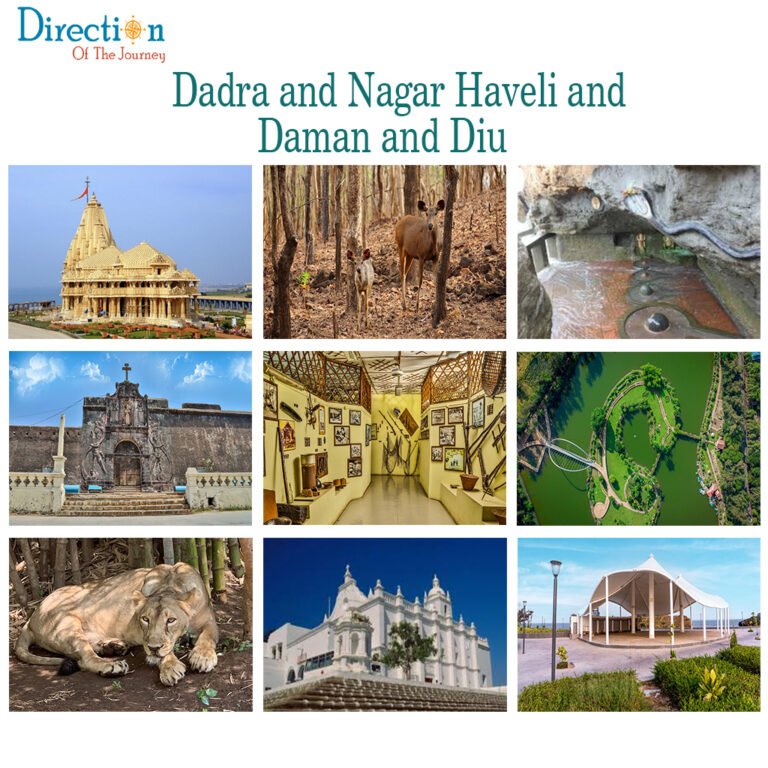
Table of Contents
Dadra and Nagar Haveli and Daman and Diu Travel Guide 2026
Dadra and Nagar Haveli and Daman and Diu is a Union Territory on India’s western coast, known for its Portuguese heritage, beaches, tribal culture, forests, historic churches, temples, forts and scenic waterfronts.
The Union Territory was formed on 26 January 2020 through the merger of the former Union Territories of Dadra and Nagar Haveli and Daman and Diu.
What Is Dadra and Nagar Haveli and Daman and Diu Famous For?
Dadra and Nagar Haveli and Daman and Diu is famous for its Arabian Sea beaches, Portuguese architecture, historic forts, churches, tribal culture, forests, waterfalls and seafood.
Major Things the Union Territory Is Famous For
- Diu beaches
- Daman beaches
- Diu Fort
- St. Paul’s Church
- St. Jerome Fort
- Naida Caves
- Portuguese heritage
- Tribal culture of Dadra and Nagar Haveli
- Silvassa
- Dudhani Lake
- Vanganga Lake Garden
- Tribal Museum
- Warli-style art
- Seafood and coastal cuisine
- Gujarati and tribal cultural traditions
How Did Dadra and Nagar Haveli and Daman and Diu Get Its Name?
The name comes from the four geographical areas that make up the Union Territory: Dadra, Nagar Haveli, Daman and Diu.
Dadra
Dadra is a small enclave surrounded by Gujarat.
Nagar Haveli
Nagar Haveli is a larger inland region located between Gujarat and Maharashtra.
Daman
Daman is a coastal area on the Arabian Sea.
Diu
Diu is an island and coastal region located off the southern coast of Gujarat.
Historical Background
Daman and Diu and Dadra and Nagar Haveli were formerly under Portuguese administration.
India took control of Dadra and Nagar Haveli in 1954, while Daman and Diu became part of India in 1961.
The two former Union Territories were merged into the present Union Territory of Dadra and Nagar Haveli and Daman and Diu in 2020.
What Are the Famous Nicknames of Dadra and Nagar Haveli and Daman and Diu?
Popular Descriptions
- Daman – Lotus of Marshlands
- Diu – Twin Union Territory
- Silvassa – Gateway to Tribal Culture and Nature
Which Languages Are Spoken in Dadra and Nagar Haveli and Daman and Diu?
Major Languages
- Gujarati
- Hindi
- Marathi
- English
- Portuguese – mainly as part of historical heritage rather than a widely spoken community language
- Bhili and related tribal languages
- Varli
- Konkani and other regional languages in some communities
Which Are the Most Famous Festivals of Dadra and Nagar Haveli and Daman and Diu?
Nariyal Purnima
Nariyal Purnima is an important coastal festival.
The festival is associated with fishing communities and the sea and is celebrated with traditional rituals.
Holi
Holi is widely celebrated throughout the Union Territory with colors, music and community gatherings.
Diwali
Diwali is celebrated with:
- Diyas
- Decorations
- Religious ceremonies
- Sweets
- Family gatherings
Navratri
Navratri is particularly influenced by the cultural traditions of neighboring Gujarat.
Traditional Garba and Dandiya events are popular during the festival.
Christmas
Christmas has special cultural significance because of the territory’s Portuguese and Christian heritage.
Churches in Daman and Diu hold special services and celebrations.
Feast of St. Francis of Assisi
The Feast of St. Francis of Assisi is celebrated at the historic St. Francis of Assisi Church in Diu.
Tribal Festivals
Dadra and Nagar Haveli’s tribal communities celebrate various traditional festivals connected with:
- Agriculture
- Nature
- Harvests
- Community traditions
- Local deities
Silvassa Tribal Cultural Events
Silvassa hosts cultural programs that showcase tribal:
- Music
- Dance
- Food
- Art
- Traditional clothing
What Are the Famous Folk Dances and Folk Theatre of Dadra and Nagar Haveli and Daman and Diu?
Tarpa Dance
Tarpa dance is one of the most famous tribal dances associated with the Warli community.
It is performed in a circle around a musician playing the traditional Tarpa wind instrument.
Features of Tarpa Dance
- Circular formations
- Traditional music
- Community participation
- Tribal costumes
- Agricultural and social themes
Bhawada Dance
Bhawada is a traditional tribal dance associated with the tribal communities of Dadra and Nagar Haveli.
It is generally performed during community celebrations and festivals.
Dhol Dance
Traditional dances accompanied by dhol and other percussion instruments are common during local celebrations.
Garba and Dandiya
Because of the territory’s close cultural connection with Gujarat, Garba and Dandiya Raas are widely performed during Navratri.
Folk Theatre and Cultural Performances
The territory does not have one single folk theatre tradition uniquely identified with all four regions. Instead, traditional performances include:
- Tribal storytelling
- Folk songs
- Community dramas
- Religious performances
- Gujarati folk theatre influences
- Cultural stage performances
What Is the Famous Food of Dadra and Nagar Haveli and Daman and Diu?
Famous Foods and Dishes
- Seafood
- Fish curry
- Prawn dishes
- Coconut-based preparations
- Gujarati thali
- Dal dhokli
- Rotla
- Fafda
- Daman-style seafood
- Tribal cuisine
- Local vegetables
- Portuguese-influenced preparations
Seafood
Seafood is particularly popular in Daman and Diu because of their coastal location.
Visitors can find dishes made with:
- Fish
- Prawns
- Crab
- Other locally available seafood
Gujarati Cuisine
The influence of Gujarat is visible in dishes such as:
- Gujarati thali
- Rotli
- Dal
- Kadhi
- Dhokla
- Fafda
Tribal Cuisine
Traditional tribal food in Dadra and Nagar Haveli often uses:
- Millets
- Rice
- Seasonal vegetables
- Forest produce
- Local herbs
Portuguese Influence
Daman and Diu’s Portuguese history has influenced some local food traditions, particularly in the preparation of meat, seafood and baked foods.
Which Art and Handicrafts Are Famous in Dadra and Nagar Haveli and Daman and Diu?
Warli Art
Warli art is one of the best-known tribal art traditions associated with the western Indian tribal belt.
It traditionally uses simple geometric forms to depict:
- Human figures
- Animals
- Farming
- Hunting
- Festivals
- Marriage ceremonies
- Village life
Bamboo Crafts
Bamboo is traditionally used to create:
- Baskets
- Mats
- Household items
- Decorative products
- Agricultural tools
Cane Crafts
Cane is used for making:
- Furniture
- Baskets
- Decorative items
- Household products
Tribal Jewelry
Traditional tribal communities produce distinctive jewelry using materials such as:
- Beads
- Metal
- Silver
- Natural materials
Pottery
Traditional pottery is also found among local communities.
Other Handicrafts
- Warli-inspired paintings
- Bamboo products
- Cane furniture
- Tribal jewelry
- Terracotta
- Handwoven textiles
- Decorative handicrafts
What Is the Traditional Dress of Dadra and Nagar Haveli and Daman and Diu?
Traditional Dress for Tribal Women
Women from tribal communities may traditionally wear:
- Sarees
- Lugda-style garments
- Blouses
- Traditional jewelry
- Beaded ornaments
Warli and other tribal communities have distinctive styles of clothing and ornaments.
Traditional Dress for Tribal Men
Men may traditionally wear:
- Dhoti
- Shirt or simple upper garment
- Headcloth
- Traditional accessories
Traditional Gujarati Influence
Gujarati-style clothing is also common, particularly in urban and festival settings.
Women may wear:
- Chaniya choli
- Saree
- Salwar suits
- Embroidered dupattas
Men may wear:
- Kurta
- Pajama
- Dhoti
- Traditional Gujarati attire during festivals
Portuguese Influence
The Christian communities of Daman and Diu also have clothing traditions influenced by their historical Portuguese connection, particularly during religious celebrations.
Which Are the Most Famous Pilgrimage Places in Dadra and Nagar Haveli and Daman and Diu?
Somnath Mahadev Temple – Daman
The Somnath Mahadev Temple is an important Hindu temple in Daman.
It attracts devotees and visitors interested in the region’s religious heritage.
Gangeshwar Temple – Diu
Gangeshwar Temple is one of Diu’s most distinctive religious attractions.
The temple is famous for its five Shiva lingas located near the Arabian Sea.
According to local tradition, the lingas are associated with the Pandavas.
St. Paul’s Church – Diu
St. Paul’s Church is one of the most important historic churches in Diu.
It is known for its elaborate architecture and Portuguese heritage.
St. Francis of Assisi Church – Diu
This historic church is associated with the Portuguese period and is an important part of Diu’s Christian heritage.
Church of Bom Jesus – Daman
The Church of Bom Jesus is an important historic church in Daman.
What Are the Best Tourist Places to Visit in Dadra and Nagar Haveli and Daman and Diu?
Diu Fort
Naida Caves – Diu
Nagoa Beach – Diu
Ghoghla Beach – Diu
Jallandhar Beach – Diu
St. Paul’s Church – Diu
INS Khukri Memorial – Diu
Daman Beach
Devka Beach
Jampore Beach
St. Jerome Fort – Daman
Moti Daman Fort
Vanganga Lake Garden – Silvassa
Tribal Cultural Museum – Silvassa
Dudhani Lake – Dadra and Nagar Haveli
Dudhni Water Sports Complex
Satmaliya Deer Sanctuary
Lion Safari – Silvassa
Island Garden – Silvassa
When Is the Best Time to Visit Dadra and Nagar Haveli and Daman and Diu?
October to March – Best Overall Season
This is the most comfortable period for exploring:
- Diu Fort
- Daman beaches
- Silvassa
- Dudhani Lake
- Vanganga Lake Garden
- Temples
- Churches
- Wildlife attractions
November to February – Pleasant Weather
These months are particularly suitable for:
- Beach visits
- Fort exploration
- Sightseeing
- Photography
- Nature trips
June to September – Monsoon
The monsoon brings greenery and rainfall to the region.
Dadra and Nagar Haveli can look particularly beautiful during this period, but heavy rain can affect outdoor activities.
April to May – Summer
Summer can be hot and humid, especially in coastal Daman and Diu.
Frequently Asked Questions About Dadra and Nagar Haveli and Daman and Diu
What is Dadra and Nagar Haveli and Daman and Diu famous for?
It is famous for beaches, Portuguese heritage, forts, churches, tribal culture, forests, waterfalls, wildlife and seafood.
Why was Dadra and Nagar Haveli and Daman and Diu formed?
The Union Territory was formed in 2020 by merging the former Union Territories of Dadra and Nagar Haveli and Daman and Diu.
What is the famous food of Dadra and Nagar Haveli and Daman and Diu?
The region is known for seafood, Gujarati cuisine, tribal food, coconut-based dishes and Portuguese-influenced coastal cuisine.
Which dance is famous in Dadra and Nagar Haveli?
Tarpa dance is one of the best-known tribal dances associated with the Warli community of the region.
What is the traditional dress of Dadra and Nagar Haveli and Daman and Diu?
Traditional clothing varies between communities and includes sarees, lugda-style garments, dhotis, traditional jewelry and Gujarati-style festive clothing.
Which handicrafts are famous in Dadra and Nagar Haveli?
The region is known for Warli-inspired art, bamboo and cane crafts, tribal jewelry, pottery and traditional textiles.
What are the best tourist places in Diu?
Some of the most popular attractions are Diu Fort, Nagoa Beach, Ghoghla Beach, Naida Caves, St. Paul’s Church, Gangeshwar Temple and INS Khukri Memorial.
What are the best tourist places in Daman?
Popular attractions include Devka Beach, Jampore Beach, Moti Daman Fort, St. Jerome Fort and historic Portuguese churches.
What are the best places to visit in Dadra and Nagar Haveli?
Important attractions include Silvassa, Dudhani Lake, Vanganga Lake Garden, Tribal Cultural Museum and Satmaliya Deer Sanctuary.
What is the best time to visit Dadra and Nagar Haveli and Daman and Diu?
October to March is generally the best time for comfortable sightseeing, beaches, historical attractions and outdoor activities.
How many days are enough to visit Dadra and Nagar Haveli and Daman and Diu?
A 5–7 day trip can provide a good overview of Daman, Diu and Silvassa. Travelers focusing on beaches and heritage can spend more time in Daman and Diu, while nature and tribal-culture enthusiasts can devote additional days to Dadra and Nagar Haveli.