Rajasthan – The Land of Kings | Complete Guide to Culture, Geography, Food & Tourism
Introduction to Rajasthan
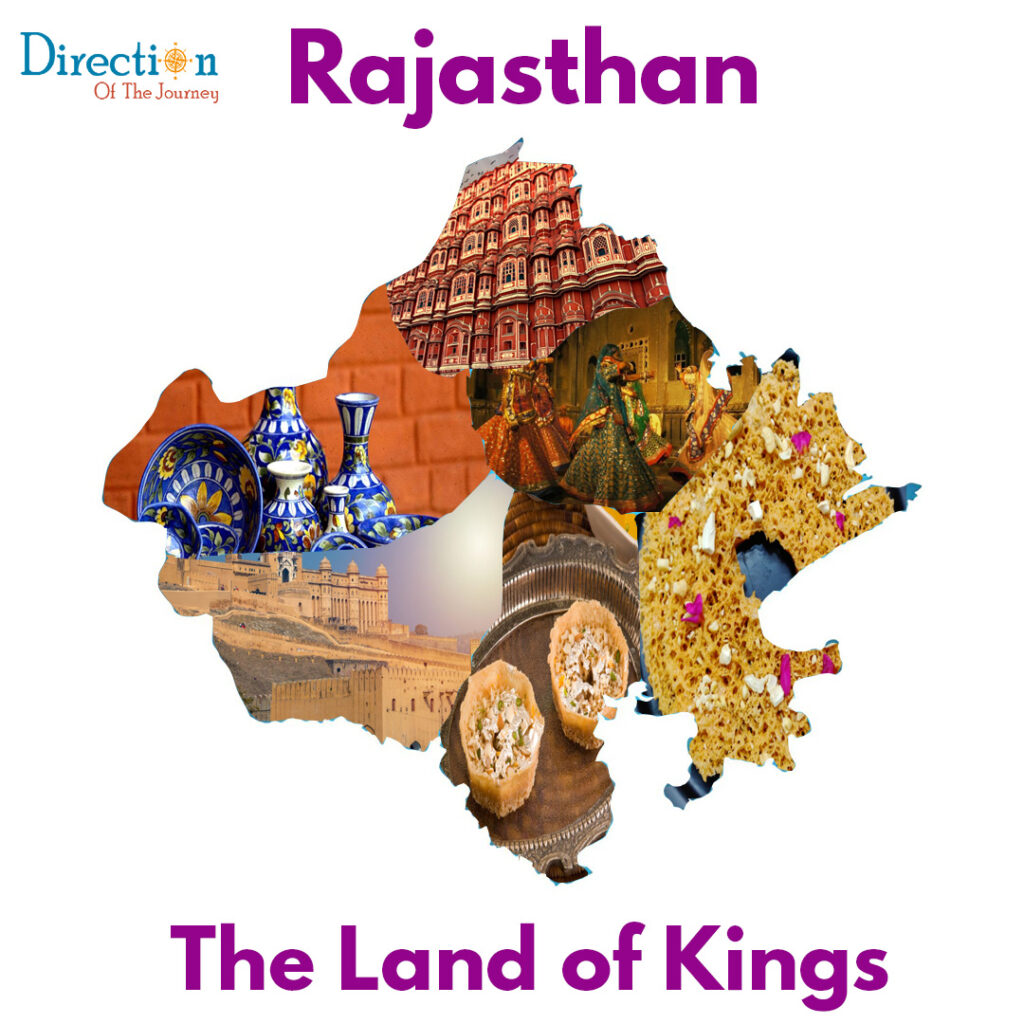
Rajasthan is one of India’s most colorful and culturally rich states. Famous for its royal history, magnificent forts, golden deserts, vibrant festivals, traditional folk music, and delicious cuisine, Rajasthan attracts millions of travelers from around the world every year. As India’s largest state by area, it beautifully blends heritage, spirituality, adventure, and natural beauty.
1. How Rajasthan Got Its Name
The name “Rajasthan” literally means “The Land of Kings.” It is derived from two Sanskrit words:
- Raja – meaning King
- Sthana – meaning Land or Place
Historically, the region was ruled by powerful Rajput kingdoms known for bravery, sacrifice, and royal traditions. Because of this glorious royal past, Rajasthan became famous as the land of mighty rulers and majestic palaces.
2. Famous Nicknames of Rajasthan
Rajasthan is popularly known by several iconic nicknames:
- Land of Kings
- Rajputana
- Desert State of India
- Land of Forts and Palaces
These names perfectly represent its royal heritage, warrior culture, and magnificent architecture.
3. Geography of Rajasthan
Rajasthan covers an area of 342,239 square kilometers, making it the largest state in India. The state occupies nearly 10.41% of India’s total land area.
One of the most important geographical features of Rajasthan is the ancient Aravalli Mountain Range, which divides the state into two distinct regions:
- The dry desert region in the west
- The fertile plains in the east
The Aravalli Range is among the oldest fold mountain systems in the world and plays a major role in Rajasthan’s climate and landscape.
Main Physical Regions of Rajasthan
1. Thar Desert (Western Rajasthan)
The Thar Desert covers almost 60% of the state. It is famous for:
- Massive sand dunes
- Camel safaris
- Extreme summer temperatures
- Sparse vegetation
Cities like Jaisalmer and Barmer showcase the true desert beauty of Rajasthan.
2. Aravalli Hills Region
The Aravalli Range stretches diagonally across the state for nearly 550 km.
Highest Peak:
- Guru Shikhar in Mount Abu
- Height: 1,722 meters
This region creates a natural climatic divide and provides cooler temperatures in southern Rajasthan.
3. Eastern Plains
The eastern part of Rajasthan contains fertile alluvial plains formed by river deposits. This region receives better rainfall and supports:
- Agriculture
- Farming communities
- Dense settlements
4. Hadoti Plateau
Located in southeastern Rajasthan, the Hadoti Plateau is known for:
- Black volcanic soil
- Rocky terrain
- Deep river valleys
- Rich water resources
Rivers and Water Systems in Rajasthan
Rajasthan’s rivers are divided into three major drainage systems:
Inland Drainage System
Most western rivers disappear into the desert instead of reaching the sea.
Famous River:
- Luni River – changes from freshwater to salty water after Balotra.
Bay of Bengal Drainage System
Eastern rivers flow toward the Bay of Bengal.
Important Rivers:
- Chambal River
- Banas River
The Chambal River is Rajasthan’s only major perennial river.
Arabian Sea Drainage System
Southern rivers flow toward the Arabian Sea.
Major River:
- Mahi River
Sambhar Lake
Sambhar Lake is India’s largest inland saltwater lake and an important salt-producing region.
4. Languages Spoken in Rajasthan
Hindi is the official language of Rajasthan and is widely used in schools, offices, and business.
However, the traditional language of the state is Rajasthani, which includes several regional dialects.
Major Dialects
- Marwari – spoken in Jodhpur and Jaisalmer
- Dhundhari – common in Jaipur region
- Mewari – spoken around Udaipur
- Harauti – used in Kota region
- Mewati & Braj Bhasha – spoken near northeastern borders
5. Famous Festivals of Rajasthan
Rajasthan celebrates festivals with unmatched energy, color, music, and traditions.
Pushkar Camel Fair
Pushkar Camel Fair is one of the world’s largest camel and livestock fairs. It features:
- Camel trading
- Folk dances
- Cultural shows
- Mustache competitions
Jaisalmer Desert Festival
Held in the Sam Sand Dunes, this festival includes:
- Camel races
- Fire dances
- Turban-tying competitions
- Desert folk performances
Gangaur Festival
Dedicated to Goddess Parvati, this festival is especially popular among women in Jaipur and Udaipur.
Teej Festival
Celebrated during monsoon season with swings, music, and traditional green attire.
Kite Festival (Makar Sankranti)
The skies of Jaipur and Jodhpur fill with colorful kites every January.
6. Folk Dances and Folk Theater of Rajasthan
Rajasthan’s folk culture is deeply connected with music, storytelling, and dance.
Famous Folk Dances
Ghoomar
The most iconic dance of Rajasthan performed by women in colorful ghagras.
Kalbelia
Kalbelia Dance is famous worldwide for its snake-like dance movements and tribal music.
Bhavai
A balancing dance where performers dance with multiple pots on their heads.
Kachhi Ghodi
A traditional dance featuring mock sword fights and horse costumes.
Fire Dance
Popular in Bikaner, where performers dance barefoot over burning charcoal.
7. Famous Food of Rajasthan
Rajasthani cuisine is known for bold spices, rich flavors, and traditional cooking methods developed for desert life.
Signature Dishes:-
Dal Baati Churma
Dal Baati Churma is the most famous dish of Rajasthan made with:
- Baked wheat balls (Baati)
- Lentil curry (Dal)
- Sweet crushed wheat dessert (Churma)
Gatte Ki Sabzi
Gram flour dumplings cooked in spicy yogurt gravy.
Ker Sangri
A unique desert vegetable dish made from wild berries and beans.
Bajra Roti with Lahsun Chutney
A rustic meal famous in rural Rajasthan.
Royal Non-Vegetarian Dishes
Laal Maas
A fiery red mutton curry from Jodhpur.
Safed Maas
A creamy white mutton curry prepared with nuts and yogurt.
Famous Snacks and Sweets
- Pyaaz Kachori
- Mirchi Vada
- Ghevar
- Mawa Kachori
- Alwar Milk Cake
8. Art and Handicrafts of Rajasthan
Rajasthan is globally famous for its traditional arts and handicrafts.
Popular Crafts
Bandhani & Leheriya
Traditional tie-dye textile art with colorful patterns.
Jaipur Blue Pottery
Jaipur Blue Pottery is made from quartz instead of clay and decorated with blue floral designs.
Miniature Paintings
Detailed paintings created using natural mineral colors.
Kundan & Meenakari Jewelry
Royal jewelry techniques famous across the world.
Mojaris & Kathputli
Handcrafted leather footwear and traditional string puppets are important cultural symbols.
9. Traditional Dress of Rajasthan
Women’s Traditional Dress
- Ghagra – Long flared skirt
- Kurti & Kanchli – Traditional upper garments
- Odhni – Decorative veil worn over the head
Men’s Traditional Dress
- Pagri / Safa – Traditional turban
- Angarkha – Wrap-style tunic
- Dhoti / Pyjama – Comfortable lower garment
- Patka – Decorative waist sash
Traditional Footwear
- Mojaris or Juttis made from camel or cattle leather.
10. Famous Pilgrimage Places in Rajasthan
Rajasthan is home to many sacred pilgrimage destinations.
Major Religious Sites
Brahma Temple
One of the world’s rare temples dedicated to Lord Brahma.
Ajmer Sharif Dargah
A globally respected Sufi shrine visited by people from all religions.
Dilwara Temples
Famous for breathtaking marble carvings.
Karni Mata Temple
Popularly known as the “Rat Temple.”
11. Best Tourist Places in Rajasthan
Jaipur — The Pink City
Jaipur is famous for:
- Amer Fort
- Hawa Mahal
- City Palace
- Colorful bazaars
Udaipur — The City of Lakes
Udaipur offers:
- Lake Pichola
- City Palace
- Romantic boat rides
- Luxury heritage hotels
Jodhpur — The Blue City
Jodhpur is known for the magnificent Mehrangarh Fort and blue-painted houses.
Jaisalmer — The Golden City
Jaisalmer is famous for:
- Golden sandstone architecture
- Desert camping
- Camel safaris
- Jaisalmer Fort
Other Must-Visit Places
- Ranthambore National Park
- Mount Abu
- Pushkar
- Chittorgarh Fort
12. Best Time to Visit Rajasthan
October to March — Best Season
The winter season is ideal for tourism because of pleasant weather, desert safaris, and sightseeing.
Temperature:
15°C to 30°C
July to September — Monsoon Season
Perfect for greenery, lakes, and budget-friendly travel, especially in Udaipur and Mount Abu.
April to June — Summer Season
Extremely hot temperatures make outdoor travel difficult.
Conclusion
Rajasthan is a magnificent blend of royal history, desert beauty, colorful traditions, spiritual heritage, and artistic excellence. From the golden sands of the Thar Desert to the peaceful lakes of Udaipur, every corner of Rajasthan tells a story of courage, culture, and timeless beauty.
Whether you explore majestic forts, enjoy vibrant folk dances, taste authentic Dal Baati Churma, or witness the grandeur of the Pushkar Camel Fair, Rajasthan offers an unforgettable experience that captures the true spirit of India’s royal heritage.