Sikkim Travel Guide 2026 – History, Culture, Food, Festivals, Pilgrimage & Tourist Places
Sikkim Travel Guide 2026
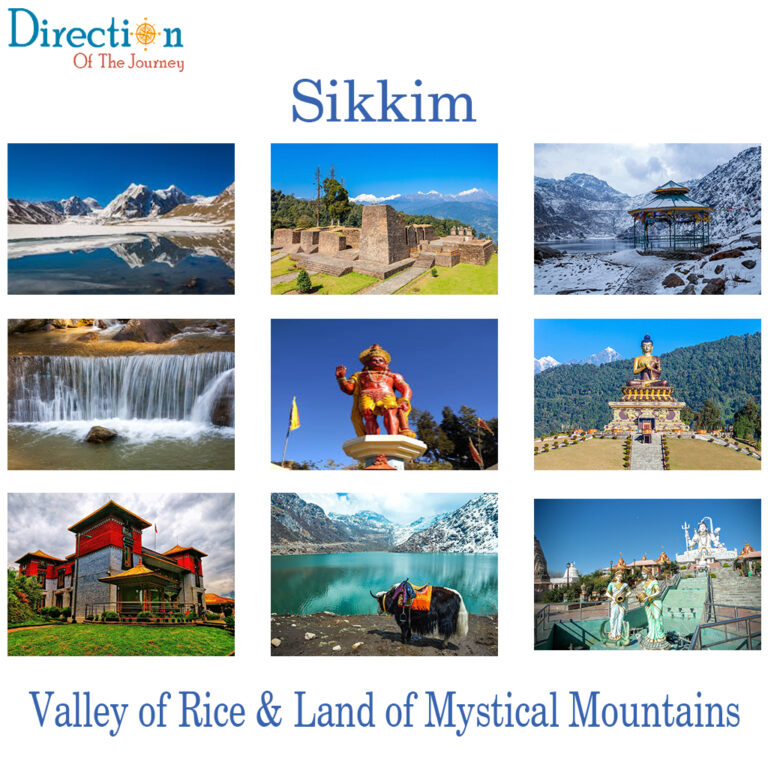
Sikkim is a beautiful Himalayan state in northeastern India, famous for its snow-covered mountains, Buddhist monasteries, lush valleys, high-altitude lakes, waterfalls, vibrant culture and breathtaking landscapes. Surrounded by Nepal, Bhutan and Tibet, Sikkim offers a unique combination of Himalayan nature, spirituality and diverse traditions.
The state is home to Kanchenjunga, the world’s third-highest mountain, and is an excellent destination for travelers interested in mountain scenery, adventure, monasteries, trekking, wildlife and local culture.
What Is Sikkim Famous For?
Major Things Sikkim Is Famous For
- Mount Kanchenjunga
- Gangtok
- Tsomgo Lake
- Nathula Pass
- Pelling
- Yumthang Valley
- Gurudongmar Lake
- Rumtek Monastery
- Pemayangtse Monastery
- Buddhist culture
- Himalayan trekking
- Organic farming
- Orchids and alpine flowers
- Traditional handicrafts
- Lepcha, Bhutia and Nepali cultures
How Did Sikkim Get Its Name?
The exact origin of the name Sikkim has several interpretations.
One widely cited explanation connects the name with Limbu words Su, meaning “new,” and Khim, meaning “house” or “palace.” This interpretation is often explained as referring to a “new house” or “new palace.”
Another traditional explanation connects the name with the historic ruling dynasty and regional languages.
The traditional Tibetan name for Sikkim is Drenjong, often interpreted as the “Valley of Rice.”
What Are the Famous Nicknames of Sikkim?
Sikkim is associated with several descriptive names because of its mountains, natural beauty and cultural heritage.
Popular Names Associated With Sikkim
- Land of Mystical Mountains
- Land of Monasteries
- Valley of Rice
- Himalayan Paradise
- Organic State of India
The description “Land of Mystical Mountains” is particularly associated with Sikkim’s dramatic Himalayan landscapes.
Which Languages Are Spoken in Sikkim?
Major Languages of Sikkim
- Nepali
- Sikkimese
- Bhutia
- Lepcha
- English
- Hindi
- Limbu
- Tamang
- Gurung
- Rai
Which Are the Most Famous Festivals of Sikkim?
Losar
Losar is the Tibetan Buddhist New Year and is celebrated by Buddhist communities with prayers, traditional performances and religious ceremonies.
Losoong
Losoong is an important Sikkimese festival traditionally associated with the harvest season. It is celebrated particularly by Bhutia communities.
Pang Lhabsol
Pang Lhabsol is one of Sikkim’s most distinctive festivals.
The festival honors Mount Kanchenjunga, regarded as a guardian deity of Sikkim, and celebrates the state’s cultural heritage.
Saga Dawa
Saga Dawa is an important Buddhist festival commemorating major events in the life of Gautama Buddha.
Bumchu
Bumchu is an important Buddhist ceremony held at Tashiding Monastery. It is associated with a sacred vessel of holy water and attracts pilgrims and devotees.
Dasain
Dasain, related to the broader Dashain tradition of the Himalayan region, is celebrated by Nepali communities in Sikkim.
Tihar
Tihar is another important festival celebrated by Nepali communities and is known for lights, decorations and traditional rituals.
What Are the Famous Folk Dances and Folk Theatre of Sikkim?
Cham Dance
Cham is a traditional Buddhist masked dance performed at monasteries during important religious festivals.
The dance combines elaborate costumes, masks, music and symbolic movements.
Maruni Dance
Maruni is a traditional Nepali folk dance performed during festivals and cultural celebrations.
Tamang Selo
Tamang Selo is a traditional musical and dance tradition associated with the Tamang community.
Yak Dance
The Yak Dance is a colorful traditional performance depicting the importance of the yak in Himalayan life and culture.
Singhi Chham
Singhi Chham, or the Snow Lion Dance, is an important traditional dance associated with Sikkim’s Bhutia Buddhist heritage.
What Is the Famous Food of Sikkim?
Famous Foods of Sikkim
- Momos
- Thukpa
- Phagshapa
- Gundruk
- Kinema
- Sel Roti
- Chhurpi
- Sha Phalley
- Thenthuk
- Sinki
- Traditional fermented foods
Momos
Momos are among the most popular foods in Sikkim. These steamed dumplings may be filled with vegetables, cheese or meat.
Thukpa
Thukpa is a warm noodle soup popular throughout the Himalayan region and is especially comforting during Sikkim’s colder months.
Phagshapa
Phagshapa is a traditional dish made with pork and radish, often flavored with dried chilies.
Gundruk
Gundruk is a traditional fermented leafy vegetable preparation associated with Nepali cuisine and widely consumed in Sikkim.
Chhurpi
Chhurpi is a traditional Himalayan cheese made from yak or cow milk and is an important local food product.
Which Art and Handicrafts Are Famous in Sikkim?
Carpet Weaving
Traditional Sikkimese carpets are known for colorful designs and Tibetan-inspired motifs.
Thangka Paintings
Thangka paintings are traditional Buddhist religious artworks depicting deities, mandalas and spiritual themes.
Wood Carving
Traditional wood carving is used to create decorative objects, furniture and religious items.
Bamboo and Cane Crafts
Local artisans use bamboo and cane to create:
- Baskets
- Furniture
- Decorative objects
- Household products
Other Famous Handicrafts
- Handwoven carpets
- Buddhist masks
- Prayer flags
- Thangka paintings
- Wooden crafts
- Bamboo products
- Traditional textiles
- Handmade paper products
What Is the Traditional Dress of Sikkim?
Traditional Dress of Bhutia People
The traditional Bhutia dress is known as Bakhu or Kho.
It is a loose-fitting robe traditionally worn by both men and women.
Traditional Dress of Lepcha People
Traditional Lepcha clothing includes garments such as Thokro-Dum for men and Dumdyam for women.
These garments reflect the distinctive cultural identity of the Lepcha community.
Traditional Dress of Nepali Communities
Traditional clothing among Nepali communities includes:
- Daura Suruwal
- Gunyu Cholo
- Saree
- Shawls
- Traditional jewelry
Colorful traditional clothing is particularly visible during festivals and cultural celebrations.
Which Are the Most Famous Pilgrimage Places in Sikkim?
Rumtek Monastery
Rumtek Monastery near Gangtok is one of Sikkim’s most famous Buddhist monasteries.
It is closely associated with the Kagyu tradition of Tibetan Buddhism.
Pemayangtse Monastery
Pemayangtse Monastery near Pelling is one of Sikkim’s oldest and most important monasteries.
The monastery offers spectacular views of the surrounding Himalayan landscape.
Tashiding Monastery
Tashiding Monastery is one of Sikkim’s most sacred Buddhist sites and is associated with the annual Bumchu ceremony.
Enchey Monastery
Enchey Monastery is located near Gangtok and is an important spiritual and cultural landmark.
Dubdi Monastery
Dubdi Monastery, located near Yuksom, is traditionally regarded as one of the earliest monasteries established in Sikkim.
Kirateshwar Mahadev Temple
Kirateshwar Mahadev Temple at Legship is an important Hindu pilgrimage site dedicated to Lord Shiva.
What Are the Best Tourist Places to Visit in Sikkim?
Sikkim offers destinations ranging from high Himalayan lakes and mountain passes to monasteries, valleys and scenic towns.
Gangtok
Gangtok is the capital of Sikkim and the state’s main tourism hub.
Places to Visit in Gangtok
- MG Marg
- Rumtek Monastery
- Enchey Monastery
- Namgyal Institute of Tibetology
- Hanuman Tok
- Tashi View Point
- Banjhakri Falls
- Ganesh Tok
Tsomgo Lake
Tsomgo Lake, also known as Changu Lake, is a spectacular high-altitude lake surrounded by mountains.
It is one of the most popular destinations for travelers visiting East Sikkim.
Nathula Pass
Nathula Pass is a high-altitude mountain pass on the India-China border and is an important historical and strategic location.
Visitors require the necessary permits to access the area.
Pelling
Pelling is one of Sikkim’s most popular mountain destinations.
It is known for spectacular views of Kanchenjunga and nearby monasteries.
Yumthang Valley
Yumthang Valley in North Sikkim is famous for its alpine scenery, rhododendrons, rivers and surrounding mountains.
It is popularly known as the “Valley of Flowers of Sikkim.”
Gurudongmar Lake
Gurudongmar Lake is one of India’s highest lakes and is surrounded by dramatic Himalayan scenery.
The high altitude means travelers should take appropriate precautions and follow local travel regulations.
Yuksom
Yuksom is historically significant as the traditional starting point of the trek toward Kanchenjunga and an important location in Sikkim’s history.
Ravangla
Ravangla is a scenic destination in South Sikkim known for mountain views, monasteries and peaceful surroundings.
Namchi
Namchi is known for attractions including Samdruptse Hill and the large statue of Guru Padmasambhava.
Lachung
Lachung is a picturesque mountain village and a popular base for exploring North Sikkim.
Lachen
Lachen is another important mountain settlement and serves as a gateway toward high-altitude destinations such as Gurudongmar Lake.
When Is the Best Time to Visit Sikkim?
March to May – Spring
Spring is an excellent time to experience:
- Rhododendrons
- Orchids
- Pleasant weather
- Mountain views
- Nature photography
October to November – Autumn
Autumn is one of the best periods for clear Himalayan views.
It is particularly suitable for:
- Mountain sightseeing
- Photography
- Trekking
- Monastery visits
- Scenic drives
June to September – Monsoon
The monsoon brings heavy rainfall to parts of Sikkim.
Travel can sometimes be affected by landslides and road closures, particularly in mountainous areas.
Travelers should check local weather and road conditions before visiting.
December to February – Winter
Winter is suitable for travelers who want to experience:
- Snow-covered landscapes
- Cold mountain weather
- Winter scenery
Why Should You Visit Sikkim?
Top Reasons to Visit Sikkim
- See Mount Kanchenjunga
- Explore Himalayan monasteries
- Visit high-altitude lakes
- Experience Buddhist culture
- Explore traditional villages
- Enjoy Himalayan cuisine
- Go trekking
- See rhododendron forests
- Experience local festivals
- Explore scenic mountain roads
- Visit peaceful hill towns
- Experience Sikkim’s diverse cultures
Frequently Asked Questions About Sikkim
What is Sikkim most famous for?
Sikkim is most famous for Mount Kanchenjunga, Himalayan landscapes, Buddhist monasteries, Tsomgo Lake, Nathula Pass, Yumthang Valley, trekking and its diverse cultural traditions.
Which is the most famous tourist place in Sikkim?
Gangtok is the most popular tourist base in Sikkim, while destinations such as Tsomgo Lake, Nathula Pass, Pelling, Yumthang Valley and Gurudongmar Lake are also major attractions.
What is the famous food of Sikkim?
Momos, thukpa, phagshapa, gundruk, kinema, chhurpi and sel roti are among the foods associated with Sikkim.
Which dance is famous in Sikkim?
Cham, Singhi Chham, Maruni and traditional Yak dances are among Sikkim’s well-known cultural performances.
What is the traditional dress of Sikkim?
The Bhutia traditional dress is known as Bakhu or Kho. Lepcha and Nepali communities have their own traditional clothing styles.
Which is the most famous monastery in Sikkim?
Rumtek Monastery is one of Sikkim’s most famous and important Buddhist monasteries.
What is the best month to visit Sikkim?
For many travelers, April–May and October–November are excellent periods because of pleasant weather and generally clearer mountain views, although conditions vary by region.
How many days are enough to explore Sikkim?
A 6–8 day trip can cover Gangtok, Tsomgo Lake, Pelling and some additional destinations. A 9–12 day itinerary allows more time to explore North, South and West Sikkim.
Is Sikkim suitable for a family trip?
Yes. Gangtok, Pelling, Ravangla and several other destinations are suitable for family holidays. High-altitude destinations require additional planning, particularly for young children and travelers who may not be accustomed to altitude.